Skip to content
Using Word or Excel so far?

Your next invoice doesn’t need another copy of the old file.

Bring over your client list as CSV and create new invoices in Sumaro. Estimates, invoice status and open amounts stay together. You keep your existing Word files and Excel invoices as originals.

  • Try free for 30 days
  • Ari for draft invoices
  • Sent after your review
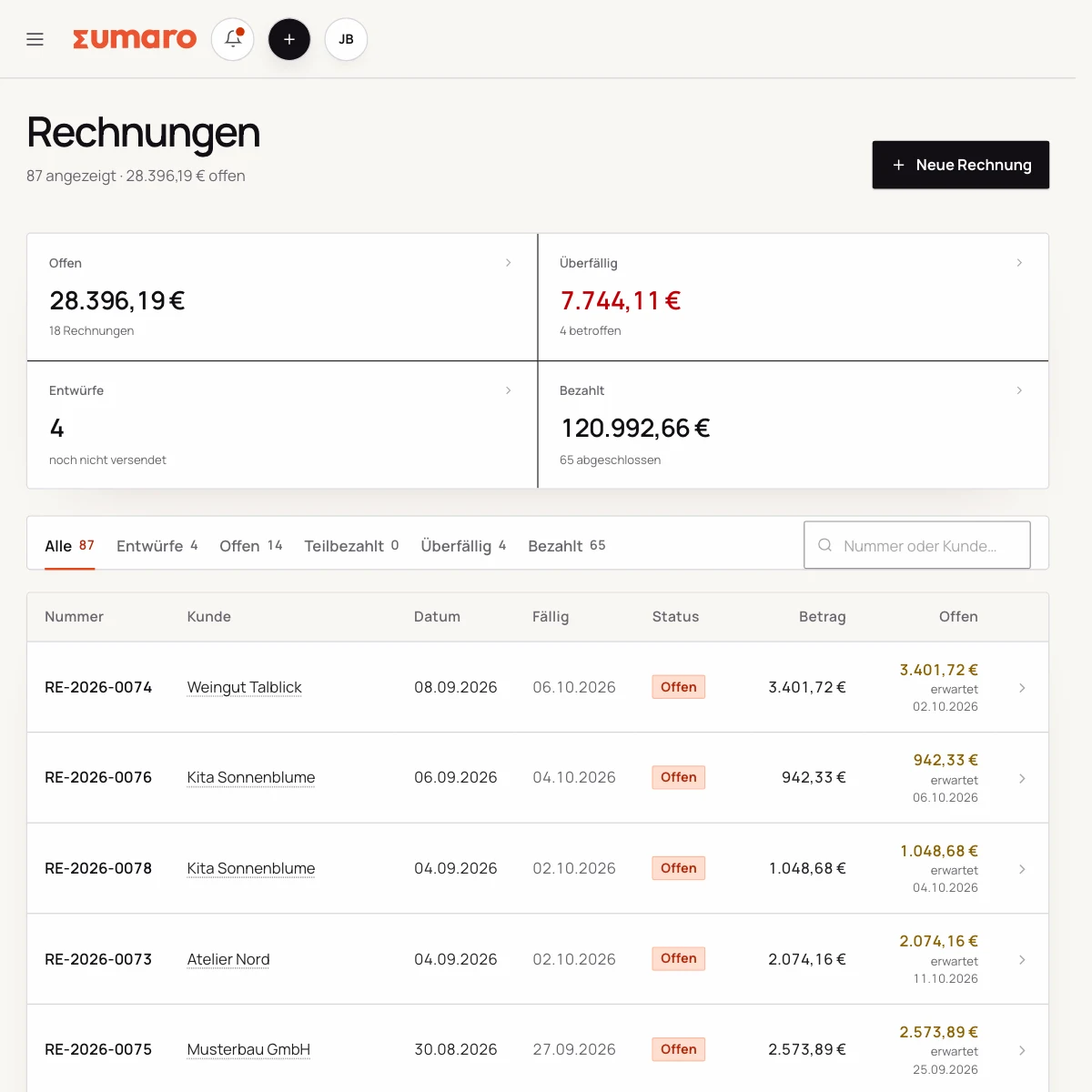
Sumaro invoice overview with fictional sample data
Real Sumaro interface · fictional sample data
Try free for 30 days
Ari for draft invoices
Sent after your review
Controlled approvals
The problem behind the problem

Your template doesn’t keep track of your invoice’s status.

A copied file easily carries over an old address or a wrong date. Whether the invoice has been paid then lives in a second spreadsheet. With Sumaro, you keep new invoices and their status in the same workspace. You decide from which job you switch.

How Sumaro solves it

Bring over your clients and start with new invoices.

Step 01

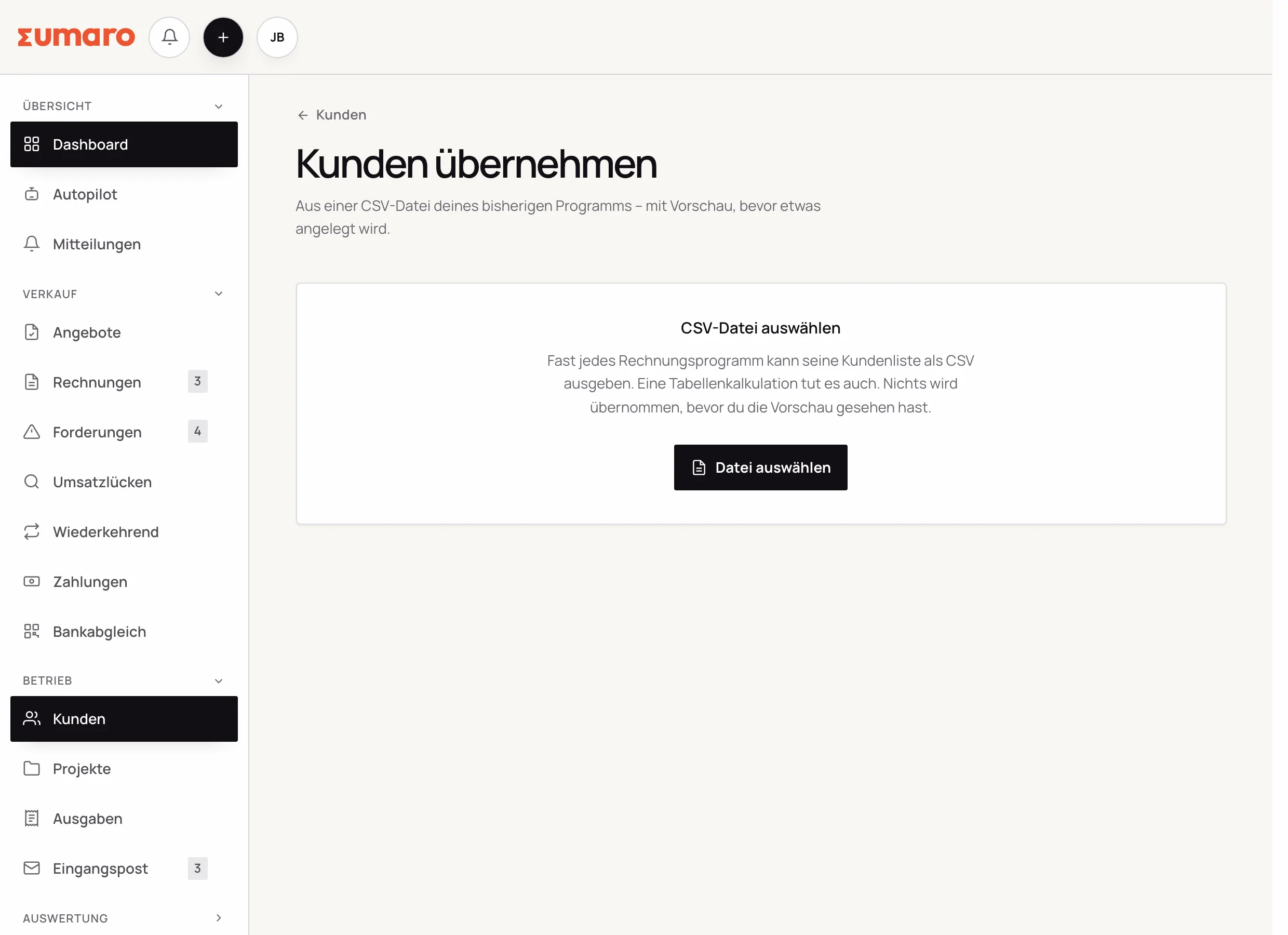
Prepare and check your client list as CSV

If your clients are in Excel, export the list as CSV. Map the columns to the matching fields in Sumaro. In the preview, you check addresses and spot possible duplicates. Only after you confirm are the selected records imported. Alternatively, add your first client by hand.

  • Upload a CSV instead of an Excel workbook
  • Map the columns in the preview
  • Check for duplicates before importing
See the workflow
Real Sumaro interface with fictional sample data: preparing and checking a client list as CSV
Step 02

Set a cut-over date for new invoices

Choose a job from which you create new invoices in Sumaro. Check your number range first. Your existing Word and Excel invoices are not automatically converted into Sumaro invoices. Keep the originals and keep following up on any old amounts still open in a traceable way.

  • Start new work in Sumaro
  • Set the number range to match
  • Keep originals and old open amounts
See the workflow
Real Sumaro interface with fictional sample data: setting a cut-over date for new invoices
Step 03

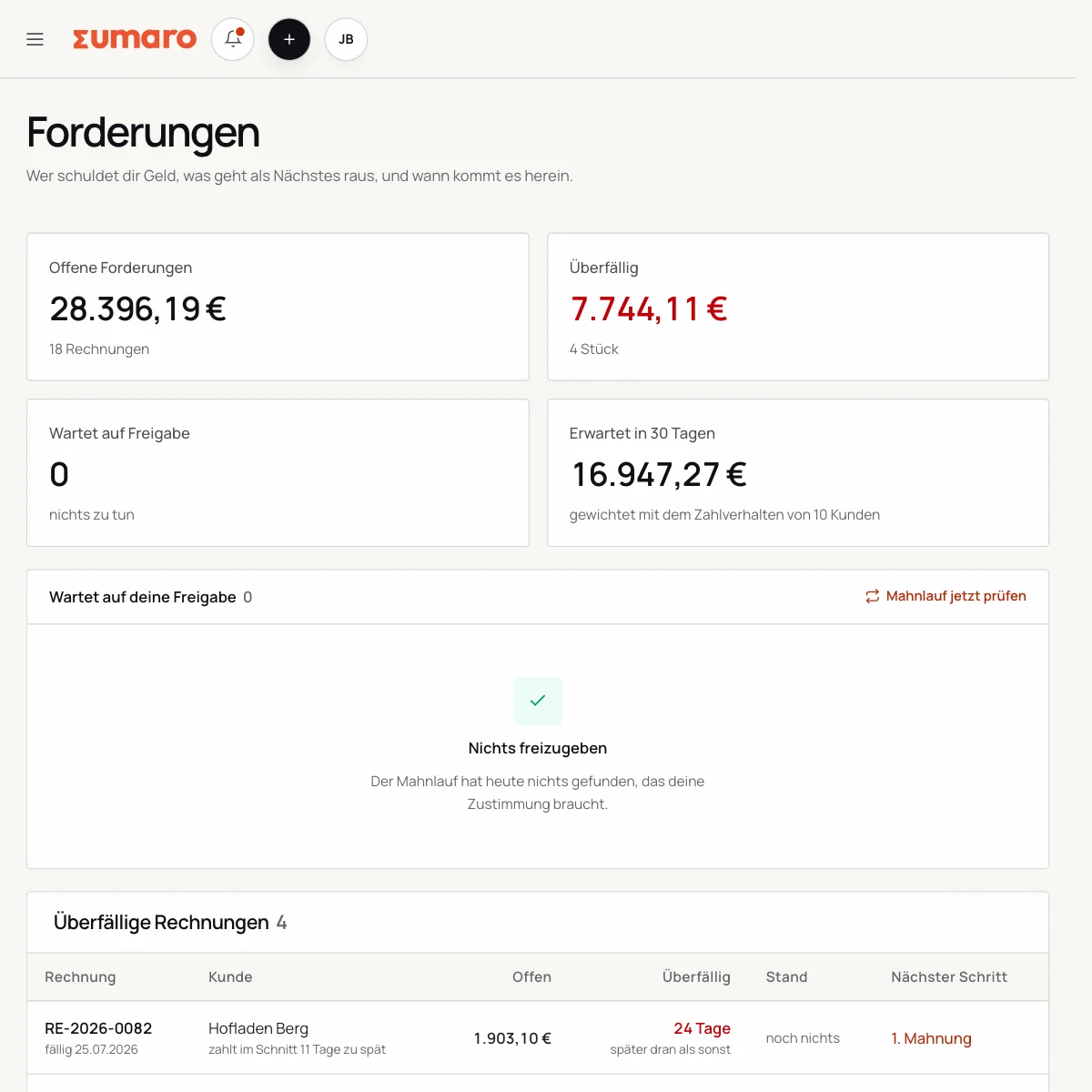
Run your next job all the way through

Create a draft or ask Ari for one. Check the invoice and then keep an eye on the due date. Upload bank transactions as CSV if needed and check the matching. That way you test on one transaction whether Sumaro simplifies your current workflow.

  • Check the draft and preview
  • See the payment status on the record
  • Try a bank CSV during the trial
See the workflow
Real Sumaro interface with fictional sample data: running the next job all the way through
Questions before you start

What you want to know before the trial.

No feature promise without context. Here is what Sumaro prepares, what you check and how getting started works.

Does Sumaro import my existing Word or Excel invoices?

No, there is no general document import for that. You can bring over clients from a CSV file. Importing outgoing invoices from DATEV or Lexware is a separate process. Start with new invoices in Sumaro and keep your existing originals.

How does bank reconciliation work?

You import bank transactions as a CSV file and check the detected columns. Clear incoming payments can be matched to open invoices. There is currently no direct bank connection. Test your bank’s CSV export before you decide.

What does Sumaro cost after the trial?

You try Sumaro free for 30 days. The trial ends on its own. Only if you actively choose to subscribe do you pay €19 per month plus VAT. You can cancel the subscription any month.

The next step

Prepare your next client invoice in Sumaro.

Test the workflow with one draft, then decide whether Sumaro is right for you. Free for 30 days; the trial ends on its own.